
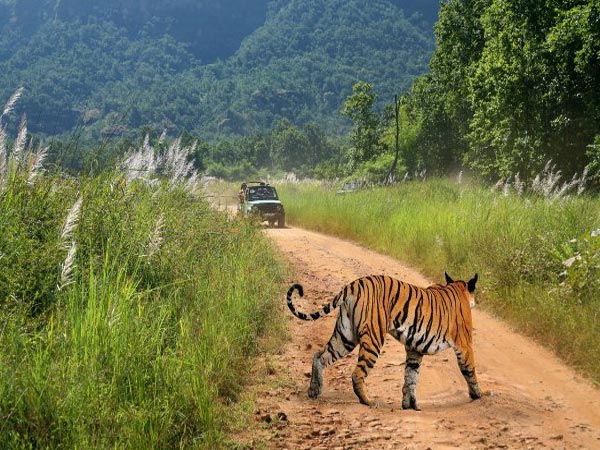
- Bandhavgarh National Park: Thrilling wildlife safaris in one of India’s best tiger reserves.
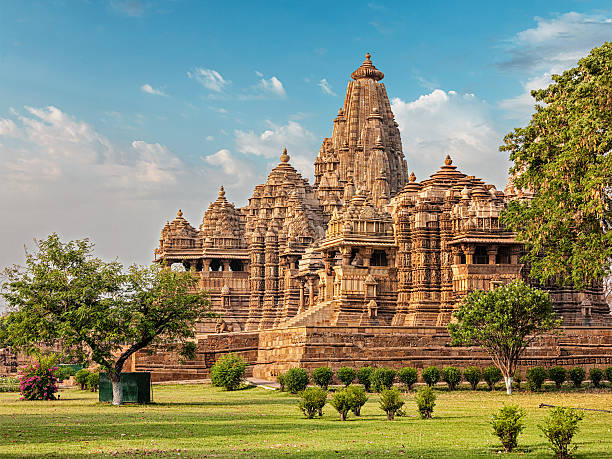
- Khajuraho: Visit the UNESCO World Heritage-listed temples renowned for their intricate erotic sculptures.
- Chanderi: Discover the exquisite handwoven textiles of Chanderi, famous for its silk saris.
- Bhopal: Explore a city with a fascinating blend of history, culture, and Mughal architecture.
- Indore: Known for its palaces, street food, and Maratha heritage.
- Maheshwar: Experience traditional handloom weaving, explore its ghats, and visit the grand Ahilya Fort.
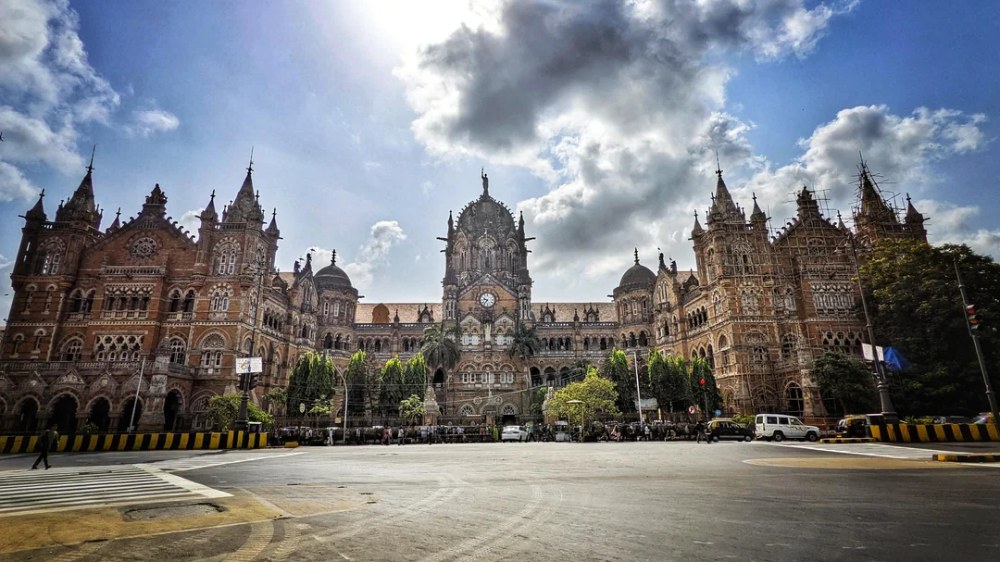
- Mumbai: End the trip in the fast-paced, cosmopolitan metropolis of Mumbai with its iconic landmarks.
Day 1 Arrive Delhi
- India’s largest city, Delhi, has been one of the country’s commercial and economic hubs for centuries and, as a result, is incredibly rich in culture and history. Made up of the ancient walled city of Old Delhi and the more modern sector, New Delhi, the city encompasses a staggering array of beautiful architecture, notable monuments and age-old temples, including three UNESCO World Heritage Sites – the Red Fort, Qutab Minar and Humayun’s Tomb. Other key attractions include the 17th century Chandni Chowk marketplace – still one of the city’s most popular retail centres today, particularly for jewellery and traditional Indian saris; the iconic Bahà’i Lotus Temple – an award-winning architectural gem; and the Jama Masjid, India’s largest mosque.On arrival in Delhi: A Representative will meet you at airport & transfer you to hotel for check in.
Standard check in time – 1400 Hrs. Rest of the day is at leisure
Day 2 In Delhi
- Breakfast at the hotel.After breakfast proceed for sightseeing tour of Old Delhi including Rickshaw Ride in Chandni Chowk followed by visit to Crafts Museum and Dilli Haat.
Situated in Delhi’s historical old town, frenetic Chandni Chowk – meaning ‘moonlit square’ – is one of the city’s oldest, busiest and most famed shopping areas, built in the 17th century and originally intersected by (now defunct) canals that were designed to capture and reflect the moonlight. It’s a shopper’s paradise – with an eclectic diversity of wares ranging from traditional Indian sweets and other delicacies, to leather goods, electronics, intricately embellished saris and tailor-made suits. But even if you’re not up for any retail therapy, the sights, sounds and atmosphere of this pulsing, labyrinthine marketplace are captivating enough in their own right.
At present the Museum collection consists of over 33,000 specimens in various crafts, acquired over a period of 60 years collected from various states of India. The collection reflects the continuing traditions of handicrafts and handlooms.
Museum collection consists of a variety of traditional artifacts such as Textiles, a vast range of metal lamps, sculptures, utensils etc, Wood-works, Folk/tribal paintings, range of cane and bamboo crafts, clay and terracotta figures and a lot more
The DILLI HAAT provides the ambience of a traditional Rural Haat or village market, but one suited for more contemporary needs. Here one sees a synthesis of crafts, food and cultural activity. This Food and Craft Bazar is a treasure house of Indian culture, handicrafts and ethnic cuisine, a unique bazaar, in the heart of the city, it displays the richness of Indian culture on a permanent basis.
Step inside the complex for an altogether delightful experience by either buying inimitable ethnic wares, savouring the delicacies of different states or by simply relaxing in the evening with the entire family.
Day 3 Delhi – Jabalpur – Bandhavgarh
- One of the most popular parks in India, Bandhavgarh National Park is renowned for the highest density of tigers in the region. The park has a large array of wildlife including sloth bears, deer, leopards and jackals. Birdwatchers will delight in the plethora of bird species inhabiting all terrains from rocky crags to the auburn forest floor and mottled forest canopy. Declared a national park in 1968, Bandhavgarh was named after an ancient fort built on 800-metre-high (2,624 foot) cliffs in the park. From its zenith one can enjoy incredible views of the park, however prior permission is required.After breakfast, early morning transfer to Delhi Airport to board flight to Jabalpur.
Upon arrival in Jabalpur, drive to Bandhavgarh [approx. 4-5 Hrs]
Arrive Bandhavgarh and check in to hotel.
Day 4 In Bandhavgarh
- Early morning and afternoon shared jeep safari to Bandhavgarh National Park (Madhya Pradesh National Parks are closed for the afternoon safaris on Wednesdays)Jeep Safari at Bandhavgarh National Park is a delight for adventure lovers and wildlife photographers. In fact these Jeep safari tours have added excitement and fun to the journey. It is the best way to explore the flora & fauna of Bandhavgarh National Park. When people go on safari in Bandhavgarh they expect to find untamed nature and unspoiled landscapes & they are not disappointed as The Bandhavgarh National Park consists of mixed vegetation ranging from tall grasslands to thick Sal forest and so is the perfect habitat of variety of animals and birds. Jeep safaris keep one enthralled for the adventure and provide the flexibility to explore especially those places, which are difficult to travel via any other mode of transportation.
During the day take a walk through the villages located on the buffer zone.
Village Walk
Between the excitement of morning and afternoon Game Drives, a lovely stroll and jaunt whilst accompanied by a Lodge Naturalist around local fields and the nearby village is a must. Season dependent, marvel at either post monsoon or winter crops being hand sown, diligently tended or gloriously harvested. Join a local village class and partake in a session of interactive learning where you will be taken through the annual cycle of local agriculture and the erratic weather patterns that dictate the survival of rural communities.
Day 5 In Bandhavgarh
Early morning and afternoon shared jeep safari to Bandhavgarh National Park (Madhya Pradesh National Parks are closed for the afternoon safaris on Wednesdays)
Day 6 Bandhavgarh – Khajuraho
- Khajuraho is considered one of India’s seven wonders and listed as a UNESCO world heritage site. The city encompasses the nation’s largest array of medieval Hindu and Jain temples, decorated with intricately detailed erotic sculptures and reliefs. The site incorporates close to 100 sacred structures, some of them exquisitely preserved, and each evening, a light and sound show is staged here, covering the history, philosophy and craftsmanship encapsulated in this archaeological goldmine. Other highlights include: vibrant Annual Dance Festival of Khajuraho; the Panna National Park, home to leopards; the Arhanta Yoga Ashram, where visitors can take classical Hatha yoga classes. The city also boasts a wide variety of wonderful shops, markets and restaurants.After breakfast, you will be driven to Khajuraho. [approx. 6 Hrs.]
Arrive Khajuraho & check-in to hotel.
Day 7 Khajuraho – Lalitpur – Chanderi
- After breakfast, proceed to visit Khajuraho temples.Khajuraho Temples
Built between 950 AD and 1050 AD by the rulers of the Chandela Dynasty, the Khajuraho Temples were a cluster of 85 Hindu and Jain temples, out of which only 25 are still surviving. Carved from hard river sandstone, one of the main allures of these walls is the erotic art. But this world famous erotic art constitutes only 10% of the total sculptures of Khajuraho.
These sculptures are not chiselled but are mobile and liquid, representing the people who exult in the joy of living, with all its fascinating variety. In fact, there is hardly any other place like Khajuraho where sculptures portray all kinds of human emotions with such great excellence. These temples also seem to celebrate women in her varied forms. They are depicted as yawning, scratching, disrobing, removing thorn from feet, playing with babies and pets like parrot, looking at mirror to do make-up etc.
There are two special sculptures that feature women playing the flute and the veena (Indian musical instruments) and writing letters, depicting women’s education and rich culture in those days.
The temples are divided into three complexes-the Western, the Eastern and the Southern. Among these the Western complex is the largest and best known, containing the magnificent Shaivite temple, Kandariya Mahadev.
Late afternoon you will be transferred to Khajuraho railway station to take a train journey (approx. 3 ½ hrs) Lalitpur.
On arrival at Lalitpur Station, you will be driven to Chanderi [approx. 1 Hr.]
Day 8 In Chanderi
- After breakfast, visit Chanderi village to meet and interact with the master crafts persons who weave the beautiful and intricate silk fabric.Chanderi
Chanderi is blessed with scenic beauty in and around it. While picturesque hills, lakes and forts sit surrounding it, the exquisite hand-woven Chanderi saris adorn this historic town.
These saris are adored around the globe for the artistry behind their creation. The elegance of this matchless intricate art of embellishing silk and cotton fabric with zari weaving resides in harmony with the towering forts and palaces. It is a beautiful contrast rare to be found anywhere else.
The town of Chanderi, with its regal radiance, will leave you spellbound, and often, feeling like the royalty.
Day 9 Chanderi – Sironj – Bhopal
- Known as the City of Lakes, Bhopal is the capital city of the central Indian state of Madhya Pradesh. The city known for its exquisite landcapes characterised by lush forests, green hills and a number of natural and manmade lakes. While the old part of the city features a maze of narrow winding alleyways lined with grand old mosques, ancient palaces and bustling bazaars, the newer part is better planned and contains some excellent museums and galleries, manicured parks and gardens, and upmarket hotels and restaurants. Bhopal serves as a gateway to the nearby a UNESCO World Heritage Site of Sanchi, one of the most impressive Buddhist monuments in Asia. Other must-see attractions in the area include the Van Vihar National Park, home to tigers, lions and leopards; and the State Museum, displaying fossils, paintings and rare Jain sculpturesAfter breakfast, you will leave for Bhopal [approx. 5 Hrs] with stop en-route to visit the Dhurrie making area near Sironj.
Dhurrie making area near Sironj.
The floor coverings of Madhya Pradesh consist primarily of durries and carpets in a rich variety of designs. A durrie, essentially a thick cotton woven fabric, is meant for spreading on the floor, and is made all over Madhya Pradesh, especially near Sironj. The basic technique of weaving a durrie in its most primitive form can be seen in rural areas. The more universal durries are made by women in their homes, in the ‘Punja’ technique. They are usually in bold patterns and bright colors with folk designs.
Apart from Sironj, Jhabua, Raigarh, Jabalpur and Shahdol are leading centres of durrie weaving. Cotton and woolen punja durries, handwoven in various colors are designed to suit fixed as well as recent home decor. Patterns are usually based on kiln designs, geometric traditional motifs & animal and human figures.
Arrive Bhopal & Check-in to hotel.
Day 10 In Bhopal
- After Breakfast, you will be visiting visiting the Taj-ul-Masajid mosque and Tribal Museum.Afternoon workshop on Gond painting and witness Zari work.
The Taj-ul-Masajid is the largest mosque in the country and one of the largest in Asia. The mosque features a pink facade flanked by octagonal marble domed minarets, and a spectacular main hallway with pillars and marble flooring, and ceilings that are ornately decorated with petaled designs. During the day the mosque is used as an Islamic religious school.
Tribal Museum
The Tribal museum is very thoughtfully planned and the entire campus is theme based right from its entrance. Every art work has some meaning to it which is beautifully depicted but difficult to explain without basic knowledge of the tribes.
The well planned campus is divided into 6 galleries depicting Cultural Diversity, Tribal Life, Tribal Art, Tribal Mythology, Tribals of Chattisgarh and Tribal Games. It also has Art Exibition Gallery and Open Air Theatre. All the artfacts in Galleries are majorly taken from 7 major and most important tribes of state namely Gond, Bheel, Korku, Kol, Bharia, Baiga and Saharia.
Day 11 Bhopal – Ujjain – Indore
- Indore is the largest city in Madhya Pradesh, owing its growth to its dominance in the trade industry. This city is also known for its cuisine and is sometimes referred to as the ‘Street Food Capital of India’. For a wide selection of Indian fast food, the best place to visit in Indore is the Sarafa Bazar.Indore is also a city of religious and historic depth. Interesting sites worth visiting is the Rajwada Palace, the Gandhi Hall and the Lal Baag Palace.
After breakfast, drive to Ujjain to visit Bhairavgarh Village to see the concept on Batik printing and later proceed to Indore, check-in at hotel. [approx. 6 hrs drive]
Batik printing
Batik, the ancient technique of wax resist dyeing, is believed to have been practiced in Africa, China, Japan and India for more than 2000 years. Bhairavgarh became the hub of Batik printing in Madhya Pradesh, when craftsmen from Gujarat and Rajasthan came here during the reign of the Mughals, around 400 years ago.
Originally batik printed cloth was used by the tribals of surrounding areas for their draped garments, but today, all sorts of dress materials, sarees and home furnishings are made in with this technique and sold across the country.
In the workshops of Bhairavgarh, craftsmen are busy doing what seem to be swift doodles on fabric, but what emerge are beautiful motifs of flowers and leaves, creepers spiralling and twisting in perfect symmetry.
Idyllically set on the bank of the mighty Narmada River 91 kilometres southwest of Indore, the small holy town of Maheshwar is known for its ornate shrines along the sacred river, stunning forts and palaces, and splendid saris. Mentioned in the Hindu holy texts and dedicated to Lord Shiva, the city draws many pilgrims. One of the most significant shrines is that where the cenographs (chhatris) of Queen Ahilyabai and Prince Vithoji Rao are erected, next to the consecrated stairs (ghat) leading down to the water. The imposing, elaborately decorated 16th century fort, to which the same queen added a palace and numerous temples, looms over the town and offers panoramic views of the mighty river. Don’t miss the opportunity to watch the local weavers create the intricate, colourful saris for which the town is famous.
After breakfast, drive to Maheshwar [approx. 6 Hrs] with stop en-route to visit the Bhil and Bagh village for the block printing workshops.
Block Printing workshop
Bagh print is a traditional hand block print with natural colours, an Indian Handicraft practised in Bagh. Its name is derived from the village Bagh. Bagh print fabric with replicated geometric and floral compositions with vegetable colours of red and black over a white background is a popular Textile printing product.
In this printing technique the cloth used is cotton and silk cloth which are subject to treatment of a blend of corroded iron fillings, alum and Alizarin. The designs are patterned by skilled artisans. On completion of the printing process, the printed fabric is subject to repeated washing in the flowing waters of the river and then dried in the sun for a specific period to obtain the fine luster.
Day 12 In Maheshwar
- After breakfast proceed to visit Rehwa society where you will see the silk weaving and manufacturing and witness Maheshwar saree weaving, later visit to houses of weavers & witness weaving, block printing and thread spinning and dyeing processRehwa society
Rehwa Society is a not-for-profit foundation, working with weavers in Maheshwar, Madhya Pradesh in the year 1978, Richard and Sally Holkar were taking a stroll on the ghats during a visit to Maheshwar. The young successors of the Holkar Dynasty were stopped on their way by a man with a piece of cloth hanging off his arm. He eagerly showed them the light, fine fabric, telling them of the hardships his people faced due to the decline of handlooms. Encouraged by their keen interest, he asked a favour of them- to, somehow, help his people find a source of income again.
In 1979, with a grant from the Central Welfare Board and an investment of 79,000 rupees to train weavers, they established REHWA Society as a non-profit organisation. REHWA’s weavers are very well trained and rank among the best around Maheshwar. Years of training and experience ensure beautiful, high quality weaving . Each product, from fibre to finished product, is handmade and goes through several hands before reaching the customer. We always ensure that every design created, be it traditional or contemporary, not to lose the essence of Maheshwari handlooms.
Early evening leave for a boat ride on the Narmada river followed by Aarti ceremony on the ghats.
Day 13 Maheshwar – Indore – Mumbai
- The thriving metropolis of Mumbai is a go-to destination for travellers curious to experience a modern Indian city. Lapped by the Arabian Sea, this urban seaside peninsula is a melting pot of old and new India. Towering office blocks and shiny apartment buildings shoulder crumbling grand dames of architecture. Men play cricket in the leafy central parks, taxis navigate the jam packed streets and families stroll along the seaside promenades of Mumbai, while kilometres away children beg on the peripheries of Asia’s biggest slum. In the wide avenue of Colaba’s high street, western culture overshadows the brightly lit storefronts, where Levi’s, Adidas and McDonalds vie for retail space.At an appropriate timing drive to Indore airport [approx..6 Hrs] to board flight to Mumbai.
Upon arrival in Mumbai & you will be assisted & transferred to your hotel for check in.
Day 14 Mumbai
- After breakfast, proceed for half day Workshop on Block Printing at Pracheen.Pracheen
Established in the year 1979, we are well known manufacturer, supplier and exporter of quality stoles, scarves, sarees and dupattas. Our scarves have a classic look that adds to the elegance of causal as well as formal attire. All the stoles, scarves, sarees and dupattas are manufactured using quality raw material that is procured from reliable sources across India. Our team has been fortunate to receive the able guidance of our mentor Mr. Ahmed Khatri & Mr. Sarfraz Khatri, who have wide experience in the textile industry. Their expertise in the operational area has led our team to develop their skills related to fine art of block printing. We have well establish manufacturing facilities wherein we have preserved the most beautiful traditional hand blocks that has soul capturing patterns carved on them. Also the use of natural dyes has enable to offer our clients with products that are non-toxic and non-allergic.
Evening walking tour of Colaba market
Colaba Market
Colaba market is an interesting assortment of clothing, bags and other items to bring home at the end of your trip to Mumbai.
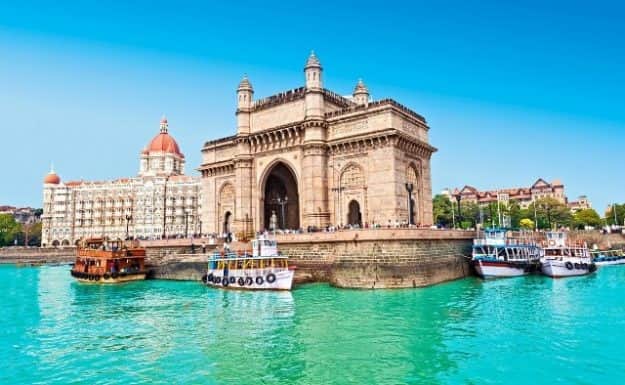
Colaba Causeway is one of the expensive street markets in Mumbai. At a stone’s throw from the famous tourist attractions like Gateway of India and Taj Hotel, it stretches over several metres flooded with all kinds of goods which hold artistic value.
As they say, it’s not very difficult to find something here which inherits a unique value of some kind. It’s not only a back packers’ paradise, it is also a home of many age-old cafes like Cafe Mondegar and Leopold Cafe and Restaurant where one can take a break from the noisy street.
Day 15 Depart Mumbai
At an appropriate timing, you will be assisted and transferred to airport to board flight to back home.
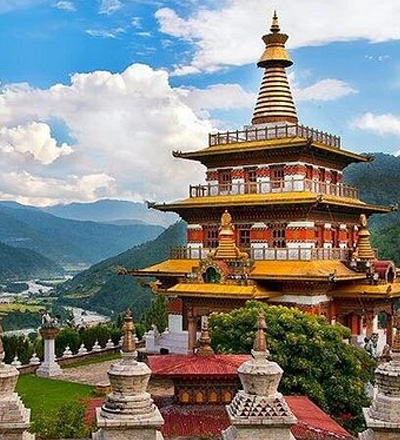
Best of Bhutan
Best of Nepal and Bhutan Tour
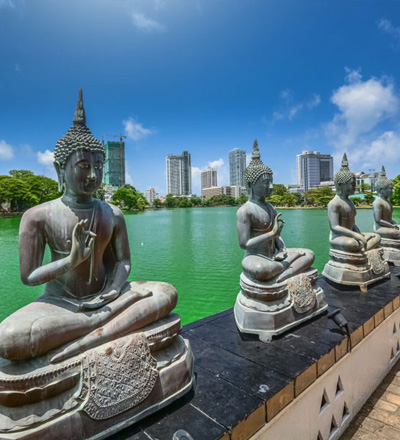
Hidden Gems of Sri Lanka
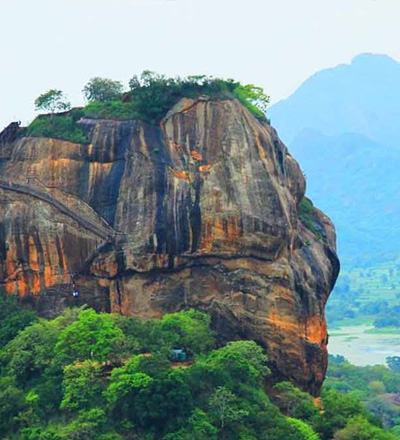
The Highlights of Lanka
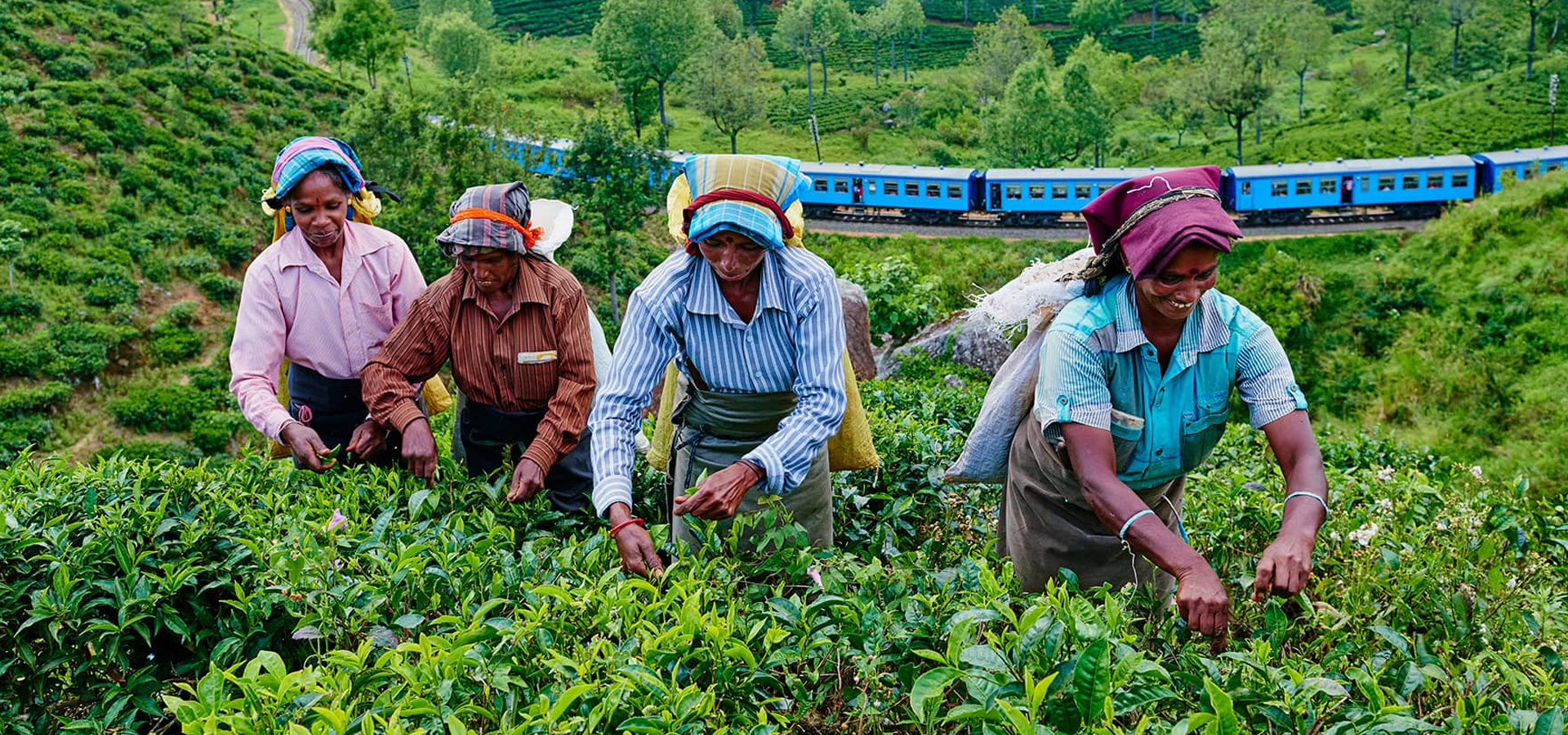
The Best of Lanka